Tuesday, 20 May 2014

Internet Of Things

Internet of Things


The Internet of Things (IoT) is a computing concept that describes a future where everyday physical objects will be connected to the Internet and be able to identify themselves to other devices.
The IoT is significant because an object that can represent itself digitally becomes something greater than the object by itself. No longer does the object relate just to you, but is now connected to surrounding objects and database data. When many objects act in unison, they are known as having "ambient intelligence."

Imagine a world where everyday appliances could demonstrate this "ambient intelligence", a basic appliance such as a washing machine email you you when you are away from home that your wash cycle is finished and is ready for a spin cycle, or could even monitor your detergent levels and order more online from a website like amazon when levels are low.
Even a device as simple as an alarm clock, if this could have access to data such as traffic information, it could detect when there are high level of traffic or roadworks and set your alarm to go off 15 minutes earlier.

The internet of things is and will be the biggest innovation in the way the internet is used for many years to come. More and more companies are looking to expand into this market.

DeviceForecast

Worlds First 'Internet of Things' City


Almost a week after revealing a US$5bn investment in Ireland, chip giant Intel is embarking on a plan with Dublin City Council to make Dublin the most densely sensored city in the world.
The project to make Dublin a ‘Global Demonstrator for Smart City Sensors’ will use Intel Quark-based Gateway platforms.
Two hundred of these sensing gateways will be placed around Dublin City to gather and monitor environmental data, in particular noise and air quality. Each of these gateways can deploy up to six sensors.
The pilot project, an international first, will give Dublin the infrastructure to be one of the most densely ‘sensed’ cities in the world.
Intel will deploy a wide-scale internet of things (IoT) research platform in Dublin, which will facilitate the project. The data which is gathered by the sensors will be made available to citizens and other stakeholders on an open basis, enabling the development of apps which will give Dubliners real-time information about air quality and noise levels.
When combined with the real-time traffic information, which is currently provided on an open basis by Dublin City Council, the project will give citizens the opportunity to shape the way the city develops.

Friday, 16 May 2014

Old technology brought back to life with modern technology

I came across a website a while back thought was pretty cool. It was created by a bunch of hackers called Lunar Orbiter Image Recovery Project team (LOIRP) that had set up shop in an closed down Mc Donalds in Silicon Valley in 2008. They were working with Nasa to digitally restore the original image used to map the moon's surface prior to the first moon landing.


The lunar satellites that mapped the moon's surface took and developed the pictures onboard, these were then scanned and transmitted back to earth. Back at Nasa the transmitted pictures were reprinted because of the technology at the time the images were printed in stripes, these stripes were put together into sections in a lab and these sections were then reassembled in aircraft hanger into one large photo that was photograph using a crane to produce one complete photo. This meant that the quality was never as good as the original data received. 

The original received data was store on magnetic tapes the main type of storage at the time. These tapes were kept in to special climate controlled to facility to preserve them, but the machines that were used to read these tapes were lost. This is where the work be began. The Ampex FR-900 tape drives were military equipment so only a few were ever built, they were used by likes of the Air Force, the CIA and other government agencies. They were long since obsolete and had been tossed away.  They eventually found one in a barn that someone had save but it had be sitting for nearly 50 years without use. This had to be completely reengineered and rebuilt using modern equipment. Simple things like the tapes use whale oil for lubrication which was no long available had replace with a suitable substance. Luckily there were still people alive that developed this technology during the lunar program to assist them in the rebuild. 

When the tape drive was completed and the data could be read from the tapes, the next issue was decoding the data in a useable form. This was done using modern computers and newly created algorithms to decode the data and save the images in modern format using Photoshop to rejoin them into a single detailed image.  


Some of the high resolution digital images that were remastered were found to be extremely detailed for photos taken back in 1966 over 50 years ago, in fact they were comparable in quality to NASA’s most recent images of the moon. The remastered images were 40k+ in resolution to put that into prospective the current digital cinemas use 8k projectors, 4X standard HD.  So the remasters images are 20X current HD technology no bad for their age. 

The next project they are working on is to recapture an old satellite ISEE-3 that has been forgotten. They will have to figure out the original control commands before its close pass to the earth in August this year. If there are successful the satellite will put into earth orbit, to be reused in the study comets in the future. 

LOIRP website www.moonviews.com
Andrew Fitzgerald

Embedded Systems meets Sports continued

In the conclusion of my last blog of Embedded Systems in Sports I touched on the idea of a system that would be able to monitor the performance of a large group of players giving real time values during the sport being played, as it would be so beneficial for sports performance analysis and one such system exists.
Its called First Beat Sports TEAM Real life monitoring devices, which has the capabilities of monitoring 80 players heart rates, VO2 max, average calories burned per minute, the list goes on. This is done by wearing a chest monitor and the results can be seen on the user interface GUI, but theres more to it than meets the eye. This system is basically a CANBUS network, the players each wear their own individual chest monitor. Each monitor has its own address which uniquely identifies each individual player. Each Monitor sends messages wirelessly on the CANBUS network to a receiver/transmitter located 100 metres within the group of players , a CANBUS message consists of an ID which is the address of the monitor worn by the player and up to 8 data bits, these data bits consist of values which represent heart rates, VO2 Max’s etc. This receiver transmitter then sends the CANBUS messages to a receiver located next to a computer up to 400M away. These messages are then interpreted by the First Team Sports Software on the laptop. Each players data bits are uniquely identifiable due to the msgID. And then each players data bits are interpreted and characterized giving the user a readable interface. The messages are being sent from the monitors at a continuous rate and this is a lot of data to be handled by the system.


We can see the benefits of this system for sports management and how excited they are about the use of this technology, in the video below is a practical example of the First Beat Sports TEAM Real life monitoring device in operation by Waterford Senior Hurling Team and giving the demonstration is there Physical Trainer Dr. Keith Hennessey, in the demonstration we see the operation of the system, he also gives us a sneak look at some data being sent down from the players heart rates which was a nice touch from him.

This is being used at an amateur sports level but also professional sports aswel which means that the market for sports analysis equipment is on the rise, professional sports teams using the product include:
Video Link:
Chicago Bulls (Basketball), Pittsburgh Steelers (American Football), Liverpool FC, Spain National Football Team, England National Football Team, French Rugby Team:


Hopefully over the last 2 blogs ive given you a good insight into the relationship between sport and embedded systems!!!
Cormac Heffernan


Thursday, 15 May 2014

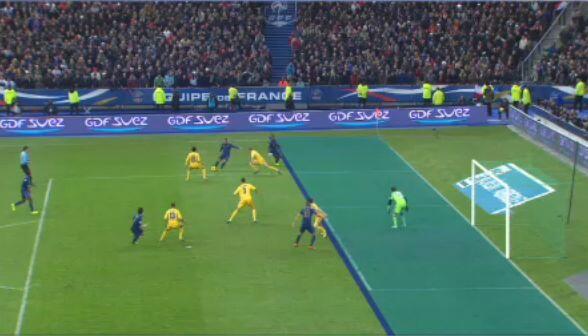
Ball Tracking and Augmented Reality

 
Vision systems have existed for several years now, mainly with applications in manufacturing processes and medical images etc. However the improvement of processing power and memory capacity as predicted by Moore's Law in recent years has allowed for vision systems to become more accessible with the implementation of vision systems in embedded systems.
 
Ball/ object tracking of any kind falls under the field of Video tracking which is the isolation of target objects in a video feed over several frames which is usually implemented with algorithms such a Blob, Kernal-based or Contour tracking.
 
Applications of object tracking include Augmented (AR) and Mediated reality, where objects/ surfaces, buildings and positions are first isolated before the video feed is overlayed with graphical or virtual elements in real time, giving the user a augmented view of their surroundings.
 
This is a growing market with products appearing in cosmetics, fashion, sport, tourism, the automotive industry etc. Most modern mobile phones now support basic Augmented Reality apps , however retail experts say that the "techy jargon" name given to the technology is damaging the consumers perception of the technology.
 
 
The image above shows one of the most basic applications of augmented reality which has been used for several years now, which is the graphical overlay of the offside line on the video feed.
 
 
Example of an embedded vision system using Field Programmable Gate Array which allows for custom specialised design and parallelism processing power.
 
Google Glasses embedded vision system which uses a OMAP 4430 processor running an Android operating system.


Cormac Heffernan - Embedded Systems meets Sports

As a blog entry I chose the title Embedded Systems meets Sports, both of which are very big parts of my life one being the career path I’ve chosen the other a huge part of my life and my favourite past time. When you say the words Embedded Systems the last thing you would think of is some running around a field kicking a football, pucking a sliothar or infact any phrases to describe a sport. But in fact the 2 are a lot more closely linked than you would think.

Over the last 10 years or so embedded systems and electronics have played huge parts in sports science, sports analysis and performance analysis of athletes. I always remembered as a younger person watching champions league matches during the night and asking myself how do they how many kilometres roy keane, ryan giggs or claurence seedorf had ran in a night? and my father for a laugh telling me they had someone counting each players steps during the match and I was young and dumb enough to believe him. Now after a small bit of growing up and I’ve gained the knowledge to understand how both the devices used in the early stages of sports analysis from decades gone by to more complex and expensive equipment used now. To answer my first question it was just pedometers worn by players at the waist, and I taught surely not the ones used by women step counters that you get in a box of special k? but yes at the very beginning these waist band pedometers obviously of better standard and quality then those out of a box of cereal were used to count the steps of the players and the figures were checked after a match by the figure on the LCD Display. 


This was obviously not a great way to have football players going out for match having things tied to there hips thankfully things have changed and now a days these electronic devices are much more user friendly and unique to each sport. One in particular as were on the topic of soccer is miadidas coach range. Which are basically electronic devices placed in the shoe of all adidas products, these products detect everything and anything from your acceleration, your ability to change direction, your vertical jump, and for individual sports like soccer you footspeed kicking the ball the amount of times you touch the ball etc. This data is then transmitted to 1Hz resolution using Bluetooth Smart technology to  any Bluetooth Smart Ready Compatible mobile device (Bluetooth 4.0 or higher). The miAdidas range also has a mobile app available which is able to get a live stream of your data with a Message Rate of 4 Hz, work out memory of 5 hours and a communication range of less than 2.5 metres in lace position the mi adidas range is more suited to individual sports like running and the like but can also be used in football for individual analysis as your able to plug the device into your computer and upload stored match data.


On conclusion of this blog Im eager to investigate the systems used by professional teams which take into account a large number of meters to be recorded with live data streams of individual performance, this blog will have a follow up which will be uploaded in due course.


Cormac Heffernan


Wednesday, 14 May 2014

the history of programming( the development of facebook )

As the social media circuit grows software advances throughout each site. With these sites increasing in popularity attention grows and the integration of marketing and advertisement makes the social media industry a multi billion dollar industry. But what is the code written in these sites that makes it so popular. PHP is used for the development of facebook it is basically a scripting language used for web design and also general purpose programming.
http://www.warriorforum.com/programming-talk/497316-what-programming-language-facebook-written.htmll
From the above link the reader will be able that zuckerberg initially used the likes of PHP , Apache unix but later incorporated C++ techniques that was used for front end development.

But why was facebooks engineers stuck with languages like PHP ?

http://www.zdnet.com/blog/facebook/why-facebook-hasnt-ditched-php/9536

from the above link the reader was able to see the main reason why facebook hasn't strayed away from PHP is that its engineers have managed to solve all flaws associated with this software. It is evident from reading this link that facebook has sort of in a way created a language with in its self for the use of facebook only by incorporating other techniques used in java ,orcale and C++ . The below caption shows some of the early source code written in PHP to develop facebook

Wednesday, 9 April 2014

On your marks get set go!!!!


Lets have the topics

Luke....google[x]
Philip....Wireless technologies
Alan..IOT in Dublin
Radoslaw..
Dean...History of programming languages
Cormac..Embedded Systems meets the sports world
Robert...Ball tracking and Augmented Reality
Andrew..
Ali..
Jason Top 5 commandants for embedded programmers

Ok lads last B;og entry accepted on 16thMay , good luck with reflecting